Global Feminisms
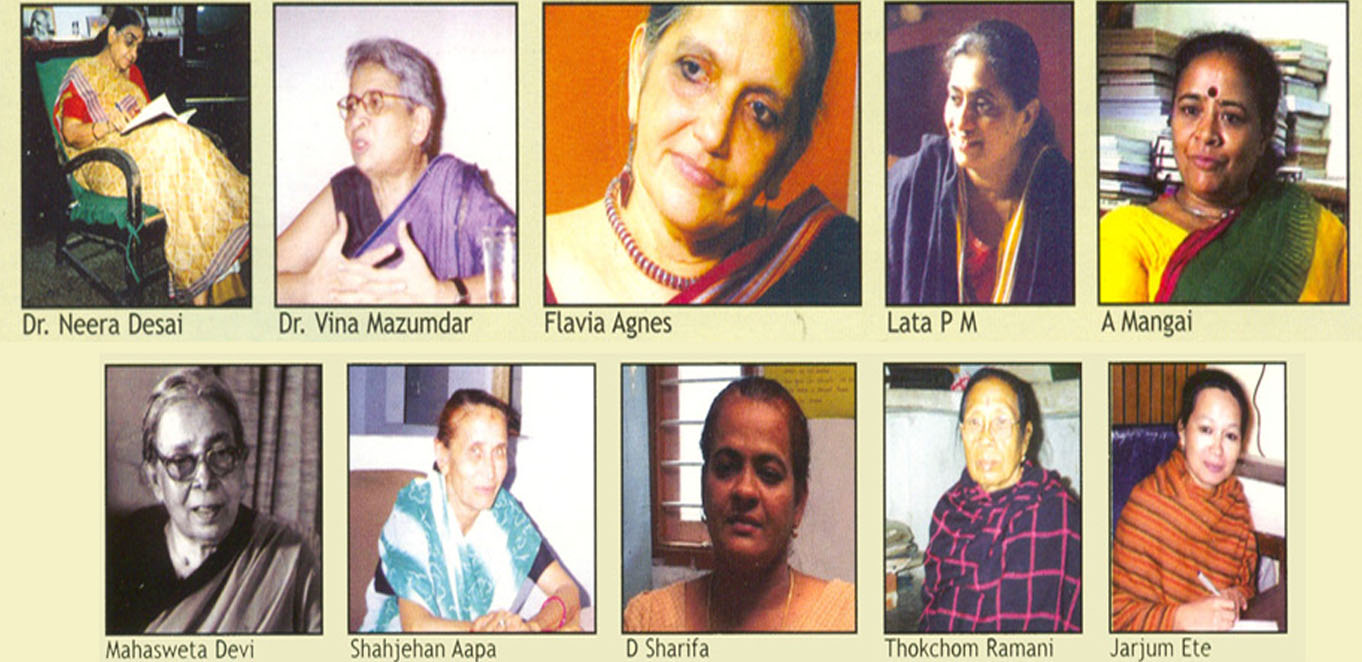
TEN WOMEN, TEN LIVES, TEN CONCERNS
COLOUR/ENGLISH/47 MINUTES/2006
CREDITS:
CAMERA: Avijit Mukul Kishore EDITING: Swarnima Sinha SOUND: Subhashis Roy PRODUCED BY: C.S. Lakshmi, SPARROW DIRECTED BY: Vishnu Mathur

A film covering the themes of the ten films made on women’s scholarship and action for the Global Feminisms project in collaboration with the University of Michigan.
Apart from being an actress, Pramila was a well-known model and a favourite of the famous photographer A.J. Patel. She was the first Miss India in 1947. Pramila passed away in the morning hours of August 6, 2006
The video notes present a history of films and people involved in the making of films in Pramila's own words
Watch full video by clicking on the image below.

NEERA DESAI
COLOUR/ ENGLISH/91 MINUTES/2003
CREDITS:
CAMERA: Mrinal Desai EDITING: Swarnima Sinha and Pankaj Kathpal SOUND: Gissy Michael PRODUCED BY: C.S. Lakshmi, SPARROW DIRECTION: Vishnu Mathur
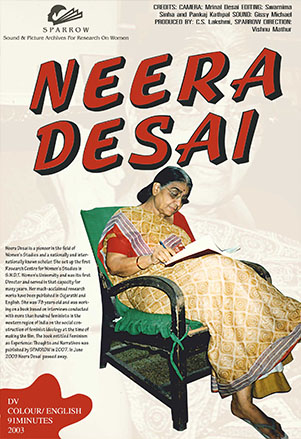
Neera Desai is a pioneer in the field of Women's Studies and a nationally and internationally known scholar. She set up the first Research Centre for Women's Studies in S.N.D.T. Women's University and was its first Director and served in that capacity for many years. Her much-acclaimed research works have been published in Gujarathi and English. She was 78 years old and was working on a book based on interviews conducted with more than hundred feminists in the western region of India on the social construction of feminist ideology at the time of making the film. The book entitled Feminism as Experience: Thoughts and Narratives was published by SPARROW in 2007. In June 2009 Neera Desai passed away.
Watch full video by clicking on the image below.

VINA MAZUMDAR
COLOUR/ ENGLISH/60 MINUTES 2003
CREDITS:
CAMERA: Alok Upadhyay EDITING: Swarnima Sinha and Pankaj Kathpal SOUND: Subhashis Roy PRODUCED BY: C. S. Lakshmi, SPARROW DIRECTED BY : Vishnu Mathur

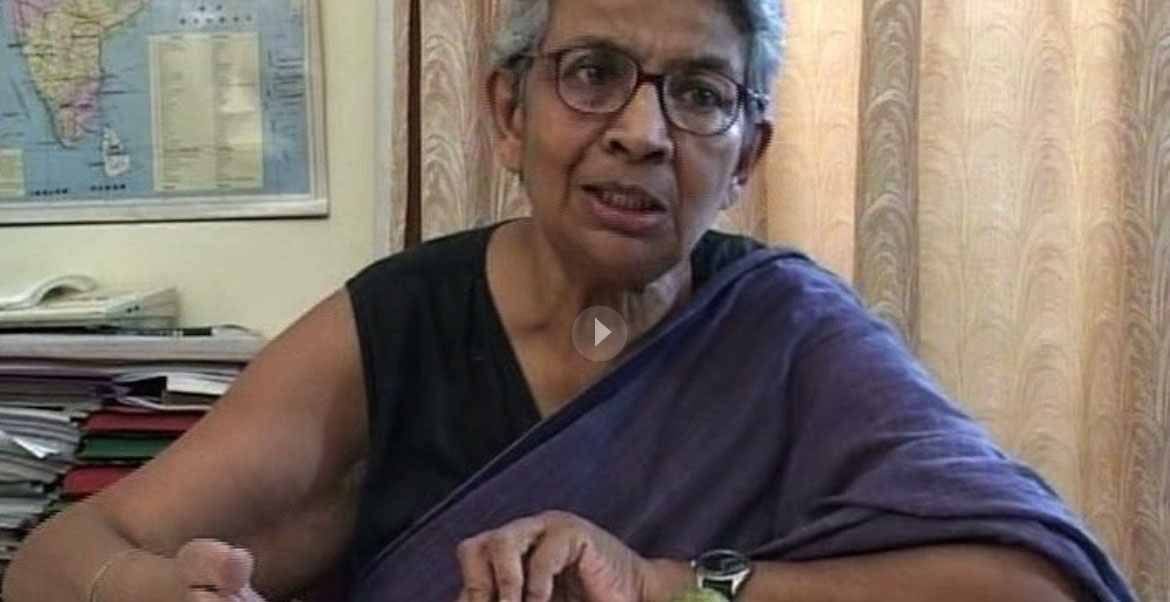
Vina Mazumdar calls herself a chronicler and recorder of the movement in India. She also fondly refers to herself as the grandmother of Women's Studies in India. As the Member Secretary of the Committee on the Status of Women in India she was instrumental in drafting what is now known as the Towards Equality report, which has been the turning point both for Women's Studies and women's movement in India. She is the co-founder of the Centre for Women's Development Studies in Delhi and has served as its Director for many years. This pioneering institution has greatly influenced the course Women's Studies has taken in India. Vina Mazumdar was 76 years old at the time of making the film and is still active voicing her protest and influencing policies regarding women.
Watch full video by clicking on the image below.
FLAVIA AGNES
COLOUR/ ENGLISH/93 MINUTES 2003
CREDITS:
CAMERA: Mukul Kishore EDITING: Swarnima Sinha SOUND:Subhashis Roy PRODUCED BY: C.S. Lakshmi, SPARROW DIRECTION: Vishnu Mathur

Flavia Agnes is a women's rights lawyer and writer and has been actively involved in the women's movement for the last two decades. She has written extensively on issues of domestic violence, feminist jurisprudence and minority rights. Her books are widely acclaimed and are popular among advocates, paralegal workers, law students and women who have been victims of domestic violence. Currently she co-ordinates the legal centre of MAJLIS and is also engaged in her doctoral research on Property Rights of Married Women with the National Law School of India.
Watch full video by clicking on the image below.

LATA P M
COLOUR/ HINDI WITH ENGLISH SUBTITLES/ 102 MINUTES 2004
CREDITS:
CAMERA: Mukul Kishore EDITING: Swarnima Sinha SOUND:Subhashis Roy PRODUCED BY: C.S. Lakshmi, SPARROW DIRECTED BY: Vishnu Mathur
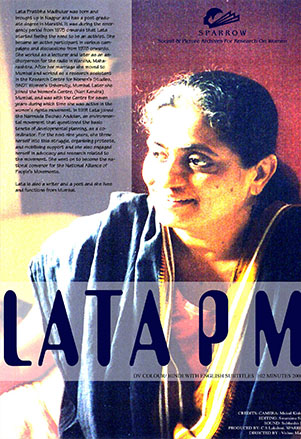
Lata Pratibha Madhukar was born and brought up in Nagpur and has a post graduate degree in Marathi. It was during the emergency period from 1975 onwards that Lata started feeling the need to be an activist. She became an active participant in various campaigns and discussions from 1978 onwards. She worked as a lecturer and later as an anchorperson for the radio in Wardha, Maharashtra. After her marriage she moved to Mumbai and worked as a research assistant in the Research Centre for Women's Studies, SNDT Women's University, Mumbai. Later she joined the Women's Centre, (Nari Kendra) Mumbai, and was with the Centre for seven years during which time she was active in the women's rights movement. In 1991 Lata joined the Narmada Bachao Andolan, an environmental movement that questioned the basic tenets of developmental planning, as a co-ordinator. For the next nine years, she threw herself into this struggle, organising protests, and mobilising support and she also engaged herself in advocacy and research related to the movement. She went on to become the national convenor for the National Alliance of People's Movements.
Lata is also a writer and a poet and she lives and functions from Mumbai.
Watch full video by clicking on the image below.
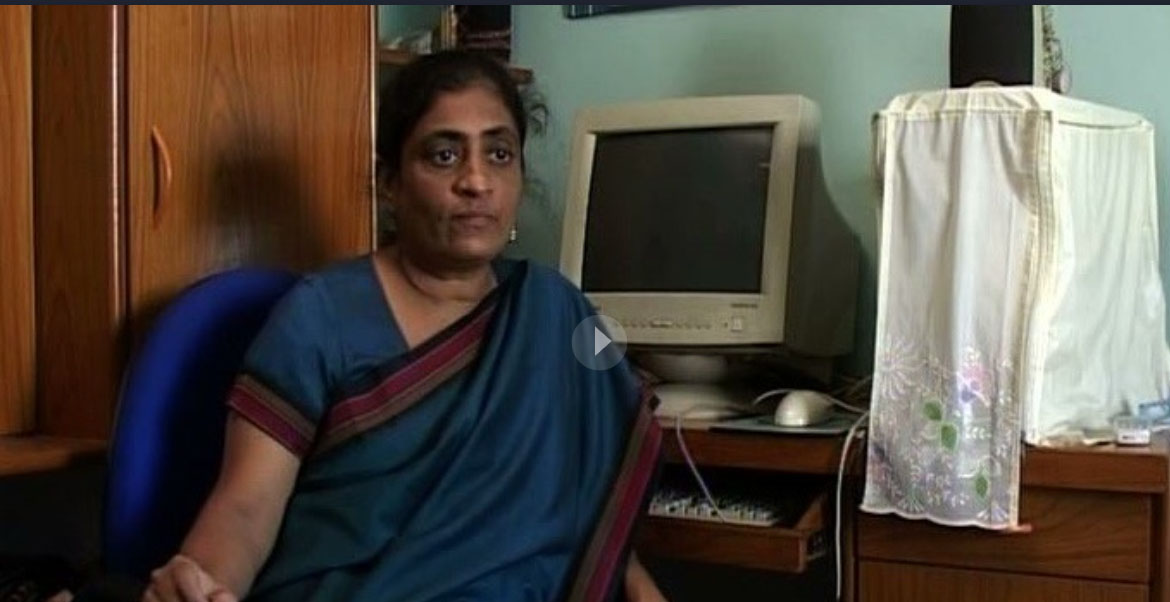
SHAHJEHAN AAPA
COLOUR/ HINDI WITH ENGLISH SUBTITLES/ 88 MINUTES/ 2004
CREDITS:
CAMERA: M. Shanthi EDITING: Swarnima Sinha SOUND: Santosh Kumar Sahoo PRODUCED BY: C.S. Lakshmi, SPARROW DIRECTION: Vishnu Mathur
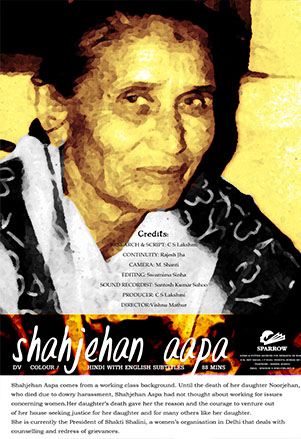
Shahjehan Aapa comes from a working class background. Until the death of her daughter Noorjehan, who died due to dowry harassment, Shahjehan Aapa had not thought about working for issues concerning women. Her daughter's death gave her the reason and the courage to venture out of her house seeking justice for her daughter and for many others like her daughter. She is currently the President of Shakti Shalini, a women's organisation in Delhi that deals with counselling and redress of grievances.
Watch full video by clicking on the image below.

MAHASWETA DEVI
COLOUR/ ENGLISH / 97 MINUTES/ 2004
CREDITS:
CAMERA: S Ramachandra EDITING: Swarnima Sinha SOUND: Subhashis Roy PRODUCED BY: C.S. Lakshmi, SPARROW DIRECTION: Vishnu Mathur

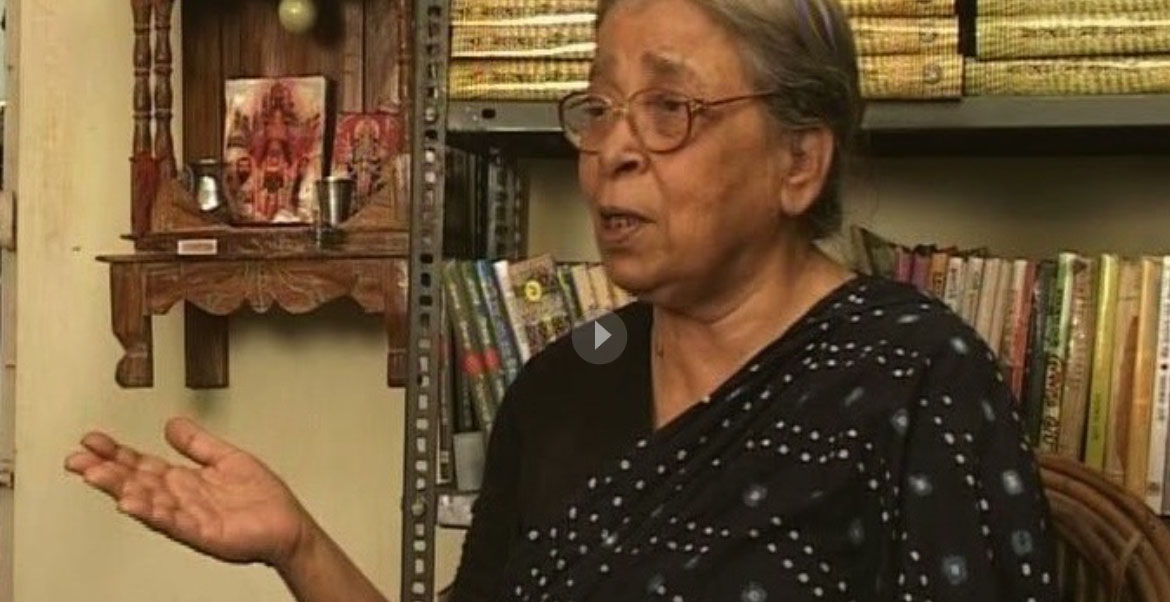
Mahasweta Devi is one of India’s foremost writers. Her trenchant, powerful fiction has won her the recognition in the form of the Sahitya Akademi (1979), Jnanpith (1996) and Ramon Magasaysay (1996) awards, amongst several other literary honours. She was also awarded the Padmasree in 1986, for her activist work among the dispossessed tribal communities. In 1980 she started editing a Bengali quarterly, Bortika, which she turned into a forum where marginalized people who had no voice elsewhere, could write about their lives and problems.
Mahasweta Devi lives in Kolkata and continues to take active interest in the problems and issues associated with the marginalised.
Watch full video by clicking on the image below.
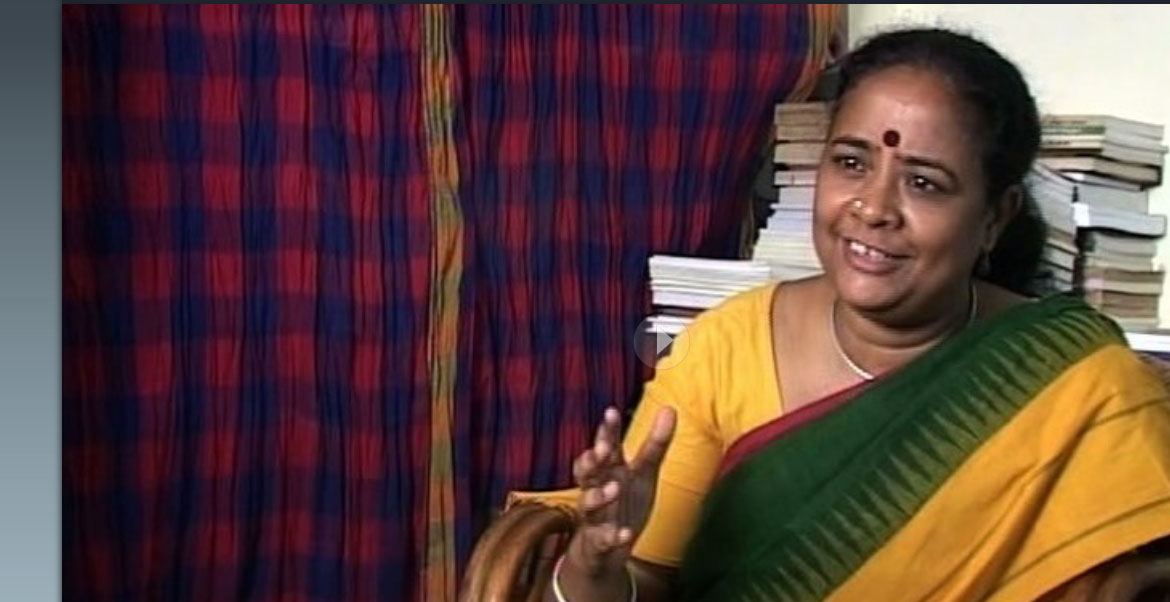
A MANGAI
COLOUR/ ENGLISH /102 MINUTES 2004
CREDITS:
CAMERA: S Ramachandra EDITING: Swarnima Sinha SOUND: Subhashis Roy PRODUCED BY: C.S. Lakshmi, SPARROW DIRECTION: Vishnu Mathur
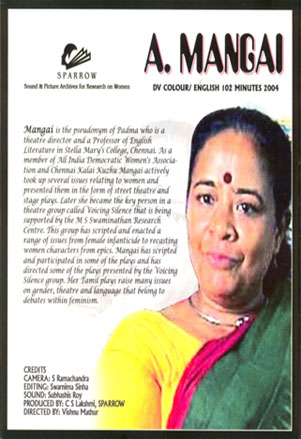
Mangai is the pseudonym of Padma who is a theatre director and a Professor of English Literature in Stella Mary's College, Chennai. As a member of All India Democratic Women's Association and Chennai Kalai Kuzhu Mangai actively took up several issues relating to women and presented them in the form of street theatre and stage plays. Later she became the key person in a theatre group called Voicing Silence that is being supported by the M.S. Swaminathan Research Centre. This group has scripted and enacted a range of issues from female infanticide to recasting women characters from epics. Mangai has scripted and participated in some of the plays and has directed some of the plays presented by the Voicing Silence group. Her Tamil plays raise many issues on gender, theatre and language that belong to debates within feminism.
Watch full video by clicking on the image below.
D SHARIFA
COLOUR/ TAMIL WITH ENGLISH SUBTITLES. 104 MINUTES. 2005
CREDITS:
CAMERA: M. Shanti EDITING: Swarnima Sinha SOUND: Jayant Pradhan PRODUCED BY: C.S. Lakshmi, SPARROW DIRECTION: Vishnu Mathur
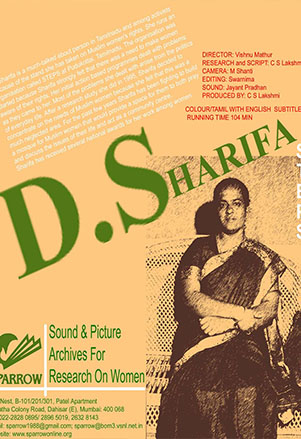
D Sharifa is a much-talked about person in Tamilnadu and among activists because of the stand she has taken on Muslim women's rights. She runs an organisation called STEPS at Pudukottai, Tamilnadu. The organisation was started because Sharifa strongly felt that there was a need to make women aware of their rights. Her initial action based programmes dealt with problems as they came to her. Most of the problems she dealt with arose from the politics of everyday life. After a research study she did in 1995, Sharifa decided to concentrate on the needs of Muslim women because she felt that this was a much neglected area. For the past few years Sharifa has been fighting to build a mosque for Muslim women that would provide a space for them to both pray and discuss the issues of their life and act as a community centre. Sharifa has received several national awards for her work among women.
Watch full video by clicking on the image below.
THOKCHOM RAMANI DEVI
COLOUR/ MANIPURI WITH ENGLISH SUBTITLES, 74 MINUTES , 2006
CREDITS:
CAMERA: Irom Ibomcha EDITING: Swarnima Sinha SOUND: Subhashis Roy PRODUCED BY: C.S. Lakshmi, SPARROW DIRECTION: Vishnu Mathur
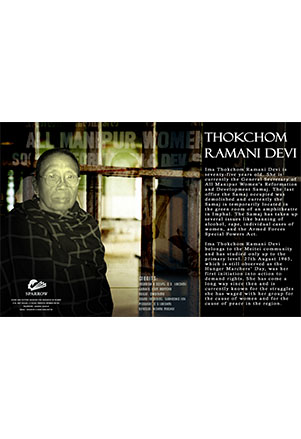
Ima Thokchom Ramani Devi is seventy-five years old. She is currently the General Secretary of All Manipur Women’s Reformation and Development Samaj. The Samaj was registered in 1978. There was no office as such. It kept shifting from one place to another. The last office the Samaj occupied was demolished and currently the Samaj is temporarily located in the green room of an amphitheatre in Imphal. The Samaj has taken up several issues like banning of alcohol, rape, individual cases of women, and the Armed Forces Special Powers Act.
Ima Thokchom Ramani Devi belongs to the Meitei community and has studied only up to the primary level. In her growing up years she learnt to weave, dance and sing. She has taken part in cultural activities. She got married at the age of seventeen and life as a woman was difficult. She had to weave, pound rice and do all the household chores and bring up her children and also take care of the elders. 27th August 1965, which is still observed as the Hunger Marchers’ Day, was her first initiation into action to demand rights. She has come a long way since then. and is currently known for the struggles she has waged with her group for the cause of women and for the cause of peace in the region
Watch full video by clicking on the image below.

JARJUM ETE
COLOUR/ ENGLISH, 87 MINUTES, 2006
CREDITS:
CAMERA: Moji Riba EDITING: Swarnima Sinha SOUND: Subhashis Roy PRODUCED BY: C.S. Lakshmi, SPARROW DIRECTION: Vishnu Mathur
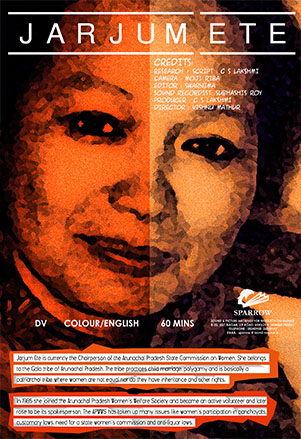
Jarjum Ete is currently the Chairperson of the Arunachal Pradesh State Commision on Women. She belongs to the Galo tribe of Arunachal Pradesh. The tribe practices child marriage, polygamy and is basically a patriarchal tribe where women are not equal nor do they have inheritance and other rights.
Jarjum Ete got married when she was just seventeen and completed her studies after marriage. Her husband is at present a civil engineer with the government. In 1985 she joined the Arunachal Pradesh Women’s Welfare Society and became an active volunteer and later rose to be its spokesperson. The APWWS has taken up many issues like women’s participation in panchayats, customary laws, need for a state women’s commission and anti-liquor laws. Jarjum herself has very strong views on legalisation of prostitution. She was one of the participants to the Beijing Conference and has also visited Pakistan and other countries.
Watch full video by clicking on the image below.